
Part of the picture
There's something about old industrial buildings that new developments rarely manage to capture. The brickwork, the scale, the little details that have been there for years — it all gives a place its own character.
Forge District is a massive old factory building with a new lease of life as a cultural centre for art, music, fashion, coffee and plenty more. It's a mix of old industrial surroundings and newer creative ideas, which is a pretty good combination in our book.
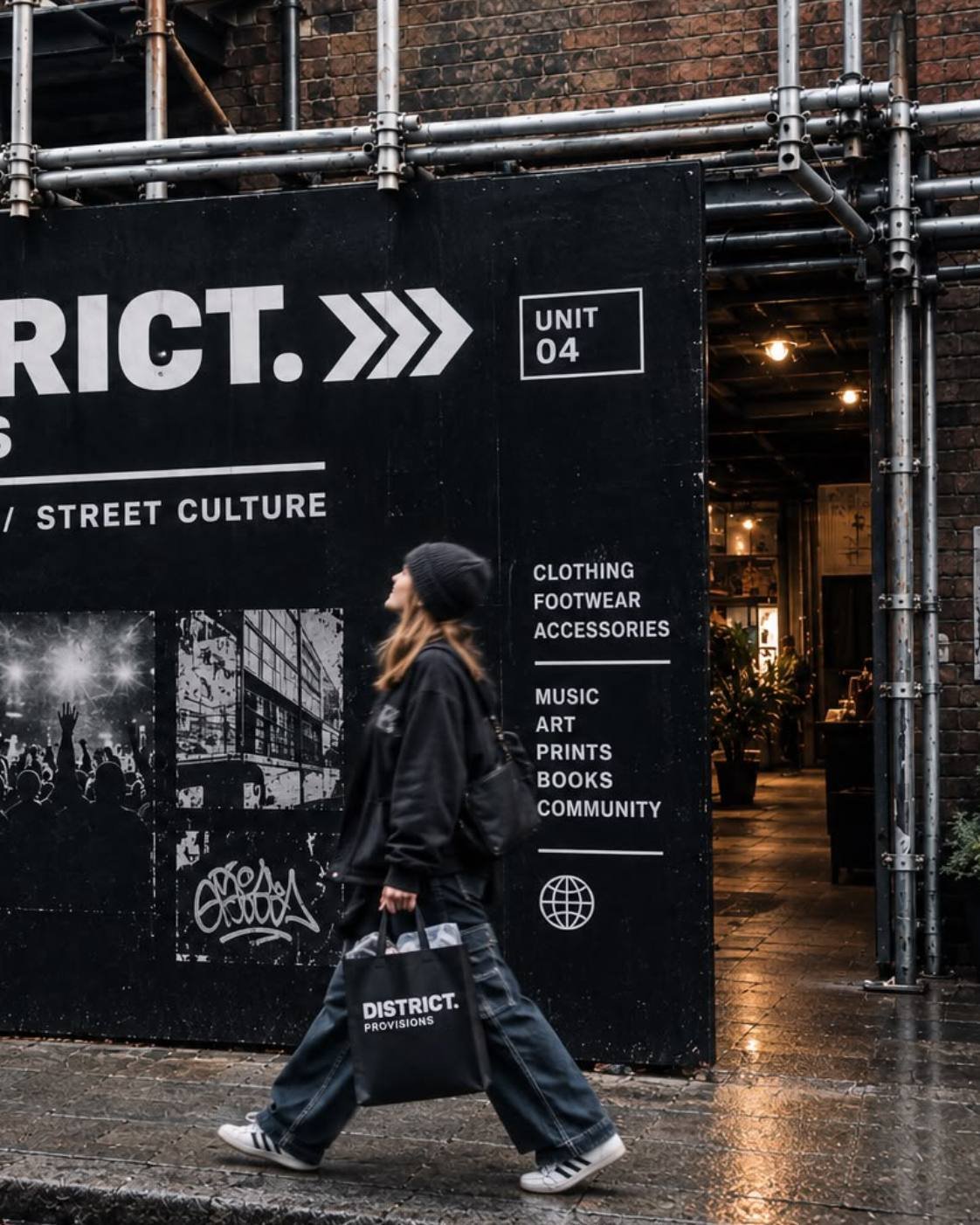
The entrance on this side has its own look, too. Scaffolding and hoarding might usually suggest a temporary arrangement while building work goes on, but here they've become a permanent part of the scene. And, as it happens, a pretty useful place for a bit of visual direction.
Follow the chevrons
The DISTRICT. PROVISIONS chevron points towards Unit 4. Simple, recognisable and doing exactly what a good bit of graphic design should do: getting the message across without making a fuss.
We like the way it sits against the rougher surroundings. There's no need to make everything shiny and polished when the existing materials already have so much character. Sometimes the best thing a design can do is know when to leave the background alone.
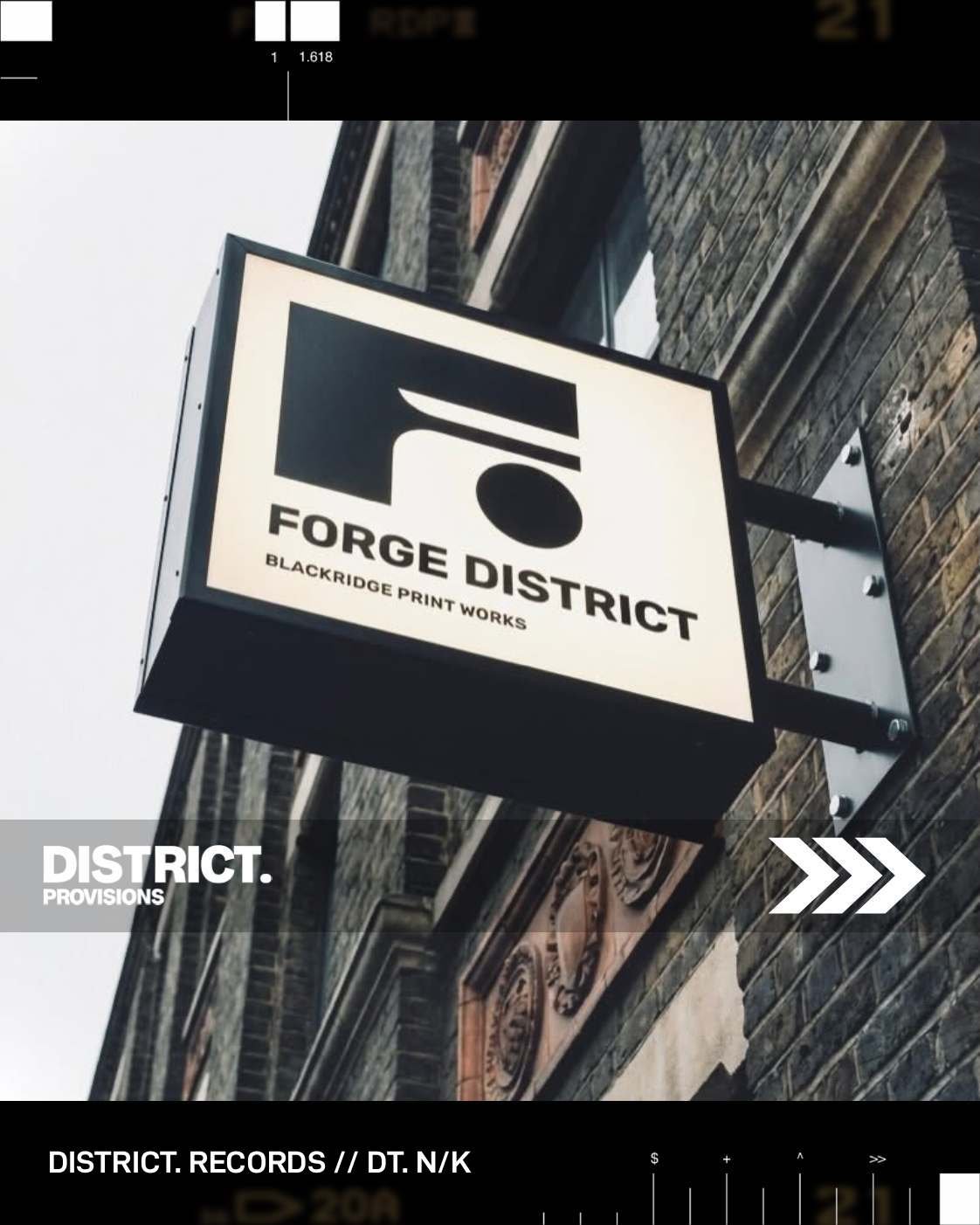
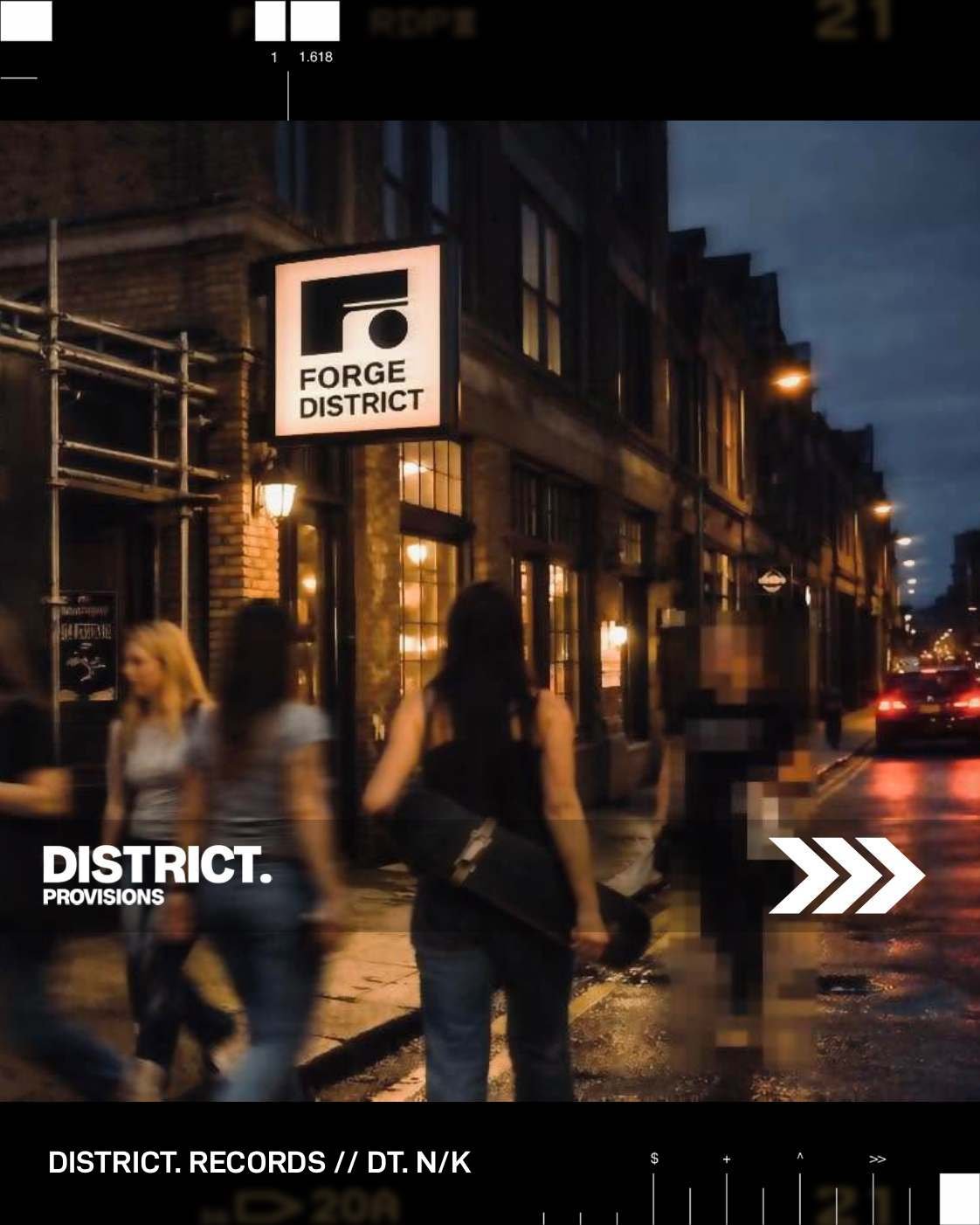
The same goes for the illuminated FORGE DISTRICT sign on the old Victorian factory wall. It's a straightforward piece of signage, but the contrast between the lightbox and the traditional brickwork makes it stand out.
Old walls, new ideas
Part of what makes Forge District interesting is the way different creative worlds sit alongside one another. The building has its own industrial history, while the activity around it gives the place a different purpose.
That's a combination we appreciate at DISTRICT. PROVISIONS. Street culture has always borrowed, adapted and made something new out of what's already there — whether that's clothing, graphics, music or the spaces people use.
These photographs capture a few details that could easily be overlooked: a sign, a wall, some scaffolding and a set of chevrons. Put them together, though, and they tell you quite a bit about the character of the place.
Sometimes it's the details that make the whole thing work.